How to Choose the Best Fire Rated Mgo Board?
Choosing the Best Fire-Rated Mgo Board requires more than comparing thickness, price, or marketing claims. A reliable decision begins with verified fire-test evidence, project conditions, and installation details. According to NFPA’s Fire Loss in the United States, 2023 report, U.S. fire departments responded to approximately 1.39 million fires, causing significant property damage and life-safety risks. These figures show why passive fire protection deserves careful specification.
Look for a Fire-Rated Mgo Board tested by recognized laboratories under standards such as ASTM E119, UL 263, or EN 13501-1, depending on the project location. The International Building Code also links fire-resistance requirements to tested assemblies, not isolated board performance. That distinction matters. A board may resist flame exposure, yet the complete wall can fail around joints, fasteners, penetrations, or poorly sealed service openings.
Check the declared fire-resistance period, density, thickness, moisture behavior, and surface finish. Ask for current test reports, factory quality-control documents, and installation instructions. UL Solutions and Intertek both emphasize that listed assemblies must follow their tested construction details. A two-hour wall is not automatically a two-hour wall when the framing or joint treatment changes.
Practical inspection is essential. Hold a sample, examine its edges, and review how it handles cutting and fastening. Small cracks can become serious weaknesses. Also, avoid assuming that every Mgo product performs identically. Manufacturing quality can vary, and some technical claims deserve closer questioning. The best selection balances tested performance, site durability, installer experience, and transparent documentation. No single board is universally best.
What Is Fire-Rated MgO Board and How Does It Work?
How to Choose the Best Fire Rated MgO Board?
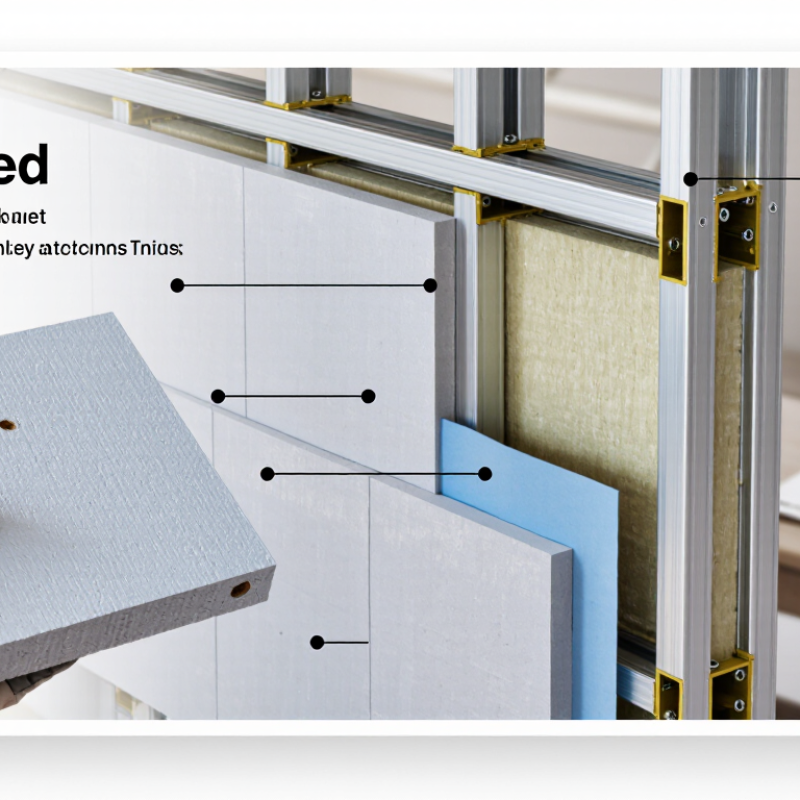
Fire-rated MgO board contains magnesium oxide, mineral fillers, and reinforcing fibers. Unlike wood-based panels, it does not provide fuel for flame spread. Under high heat, its mineral structure absorbs energy and releases limited bound moisture. This slows temperature transfer through walls, ceilings, and shaft enclosures. The board itself is not fireproof. Performance depends on thickness, joints, framing, fasteners, and installation quality.
NFPA’s Fire Loss in the United States 2023 report recorded about 1.39 million fires and approximately $22.2 billion in direct property damage. These figures show why passive fire protection deserves careful specification. Look for test evidence under ASTM E136 for noncombustibility, or ASTM E119 and UL 263 for complete fire-resistance assemblies. A two-hour rating belongs to the tested system, not automatically to every MgO sheet. That distinction is often missed.
Tips:
Ask for the full test report, not only a rating label. Check board thickness, screw spacing, joint treatment, and approved framing. Inspect cut edges and penetrations on site. Small gaps can weaken a strong assembly. Moisture resistance also matters, although it does not prove fire performance. In practice, selecting the thinnest board can reduce cost, but it may create installation problems. The safer decision compares tested assemblies, project exposure, and local code requirements.
Which Fire-Resistance Standards Should MgO Board Meet?
How to Choose the Best Fire Rated MgO Board?
Which Fire-Resistance Standards Should MgO Board Meet?
Fire performance begins with the correct standard, not a marketing label. NFPA’s Fire Loss in the United States During 2023 estimated 1,388,500 fires and about $21.9 billion in property damage. These figures show why material selection needs documented testing.
For North American projects, check ASTM E136 when noncombustibility matters. ASTM E84 measures flame spread and smoke development, but it does not provide a complete fire-resistance rating. The critical evidence is often ASTM E119, which evaluates a full wall, ceiling, or floor assembly over a stated period. A board may perform well alone and still fail within an untested assembly. That detail is easy to miss.
In Europe, review EN 13501-1 classifications, such as A1 or A2-s1,d0, for reaction to fire. Fire-resisting walls and floors may also require EN 1364 or EN 1365 testing. Always compare the tested thickness, joint treatment, framing, fasteners, and insulation with the proposed design. Small changes matter. Ask for independent laboratory reports, field-of-application limits, and manufacturing quality records. A certificate without its test scope is weak evidence. I have seen specifications rely on “fire rated” wording alone, which is not enough. The safer choice matches the local code, the tested assembly, and the actual installation conditions.
How to Choose the Best Fire-Rated MgO Board?
Which Fire-Resistance Standards Should MgO Board Meet?
How to read this chart: The values show the approximate nominal furnace temperature after 60 minutes of exposure under widely used fire-test curves. ISO 834, EN 1363-1, and GB/T 9978.1 use closely related standard fire curves, while ASTM E119 and CAN/ULC S101 use comparable North American curves.
A fire-rated MgO board should be selected according to the applicable regional test standard and the required performance classification. Fire ratings such as 30, 60, or 120 minutes apply to the complete tested assembly—including boards, framing, joints, fasteners, insulation, and loading conditions—not to the board alone.
How to Compare MgO Board Types, Grades, and Core Materials
How to Choose the Best Fire Rated Mgo Board?
When comparing fire-rated MgO boards, start with the tested assembly, not the product label. A panel may resist flame well, yet the wall can fail around joints, screws, or service openings. Request independent fire-test reports showing the exact thickness, framing, insulation, fasteners, and installation method. Fire performance belongs to the complete system.
Board types suit different conditions. Standard interior grades may work in dry partitions, while structural grades offer greater stiffness for floors or sheathing. Exterior-grade boards need better resistance to moisture cycles and temperature changes. Check density, thickness tolerance, edge strength, and screw-holding performance. Small differences matter during installation. A warped edge can create an uneven joint.
Core materials also change performance. Perlite or vermiculite can reduce weight and improve thermal behavior. Wood fiber may improve workability but requires careful moisture evaluation. Fiberglass mesh can strengthen the board, although mesh placement and bonding quality remain important. Do not judge a core by its name alone. Ask for water absorption, dimensional stability, and smoke data. In practice, installers sometimes focus only on the fire rating and overlook cutting dust, brittle edges, or incompatible joint compounds. That is an easy mistake. A reliable comparison matches the board’s grade and core design with the building’s actual exposure, load, and installation details.
How to Assess Moisture Resistance, Strength, and Durability
Choosing the best fire-rated MgO board requires more than a flame-test certificate. Moisture often decides whether a wall survives. Start with independent reports showing water absorption, thickness change, vapor transmission, and wet flexural strength. Ask for results after soaking and drying cycles, not only factory-dry values. The USDA Forest Products Laboratory’s Wood Handbook reports that fungal decay commonly develops when wood moisture exceeds 20%. This threshold matters around board joints, screws, and unventilated cavities. Inspect edges closely. Swollen edges are a warning.
Strength should be evaluated under realistic installation loads. Request bending strength, screw pull-through, impact resistance, and performance after humidity conditioning. Reports should identify sample thickness, density, conditioning time, and failure mode. ASTM E96 vapor testing can help compare permeability. Project-specific fire tests should match the complete wall assembly. Do not treat one impressive number as durability proof. No laboratory result predicts every site. That limitation deserves attention.
Tips: Store sheets flat and dry. Seal cut edges before installation. Keep joints above splash zones. Check fastener spacing against tested assemblies. Photograph samples after wet-dry cycling. Record batch information and inspection dates. In my experience, poor sealing can defeat a strong board. Yet installation quality is easy to underestimate. Pair product data with site moisture readings and independent laboratory evidence.



 Environmental Building Board
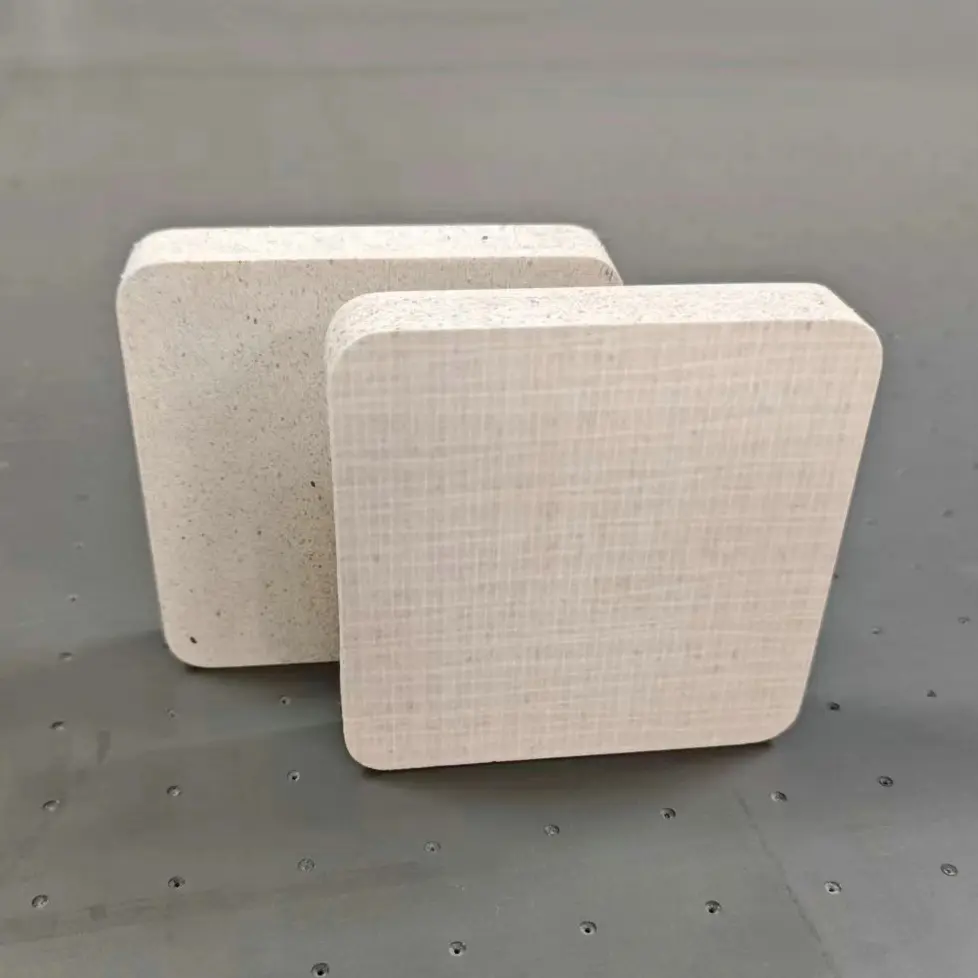 Fire-proof Board
 Sound Resistance
 Termite Resistance