Choosing the right Glass Wool Board in 2026 requires more than comparing price per square meter. Global buyers must examine thermal conductivity, density, thickness, fire performance, acoustic absorption, and facing materials. A board designed for a dry office wall may perform poorly in a humid industrial roof. Climate changes the decision.
This guide reviews common types for walls, roofs, ceilings, HVAC systems, and equipment rooms. It considers unfaced boards, kraft-faced products, aluminum-faced boards, and higher-density acoustic panels. Technical data should come from current manufacturer test reports, not attractive catalog claims. Look for declared thermal values, service temperatures, dimensional stability, and relevant fire classifications. Also verify whether testing follows recognized regional standards.
Details matter.
In real projects, installers often notice problems that spreadsheets miss. Compressed edges can create gaps. Poorly sealed joints may reduce the expected insulation benefit. A strong facing can improve handling, but it may change vapor-control requirements. Shipping distance, packaging quality, storage conditions, and local installation skills also influence the final result. No single board wins everywhere. That assumption deserves review.
The sections ahead help buyers compare performance, application fit, documentation, and long-term value. They also highlight practical questions for suppliers, including batch consistency, moisture resistance, cutting tolerance, and after-sales support. Specifications can look precise, yet site conditions remain uncertain. Careful selection means balancing tested performance with realistic installation conditions, project budgets, and regional compliance needs.
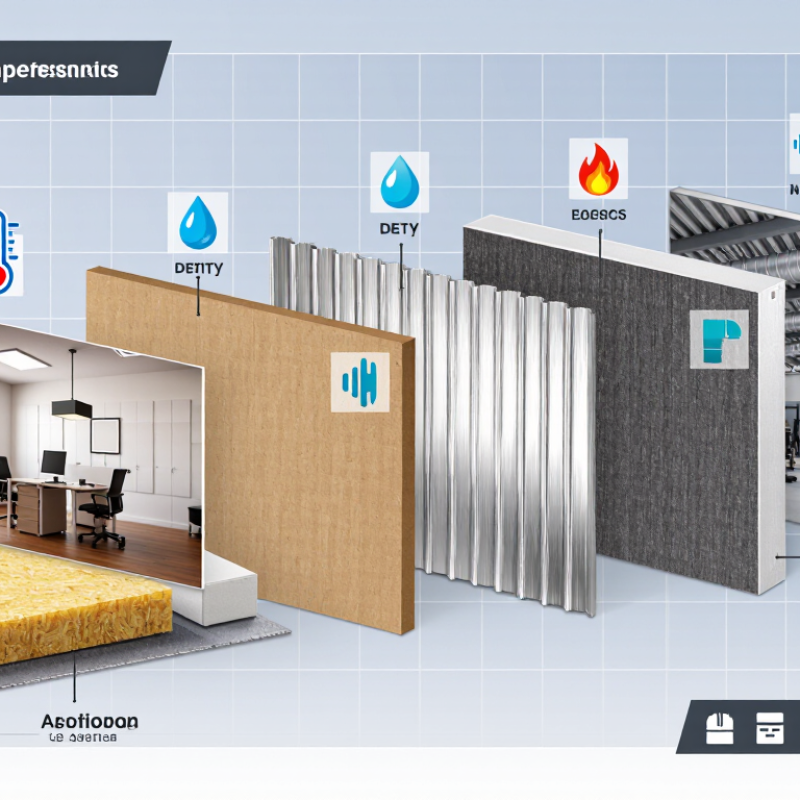
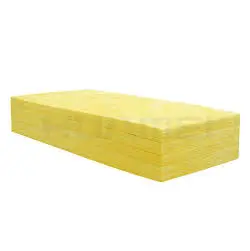
Glass wool board is a rigid or semi-rigid insulation panel made from fine glass fibers. The fibers are formed from molten glass and held together with a controlled binder. Air remains trapped between the fibers, reducing heat transfer and sound movement. The board may serve roofs, walls, ceilings, HVAC systems, or industrial enclosures.
Global buyers usually classify glass wool boards by density, thickness, facing, and declared performance. Low-density boards are lighter and easier to cut. Higher-density boards generally offer better dimensional stability and stronger surface support. However, density alone does not guarantee better acoustic results. Thickness, fiber orientation, installation gaps, and room construction also influence performance.
Faced boards may use foil, tissue, or another surface layer, while unfaced boards suit concealed applications. Moisture resistance and vapor control depend heavily on the facing and joint treatment.
Selection should match the local climate, building code, and installation method. Check thermal conductivity at the stated temperature, fire classification, acoustic test data, and product tolerances. Standards differ between regions. Do not compare labels without checking the test method. Field assessments often find that poorly sealed joints reduce real insulation performance. That detail is easy to miss. Workers should cut panels accurately and use suitable protective equipment during handling. A practical concern remains: some buyers choose the highest density, although a thinner, correctly installed board may perform better for the intended assembly. Supplier documentation deserves careful review.
Global buyers will find several glass wool board types in 2026. Common options include unfaced thermal boards, foil-faced boards, acoustic boards, and high-density rigid boards. Each type serves a different site condition. Unfaced boards suit wall, roof, and ceiling cavities. Foil-faced boards can reduce vapor movement when joints are properly sealed. Acoustic boards use resilient fibers to absorb airborne sound in partitions and suspended ceilings.
Thermal performance remains a major purchasing factor. The International Energy Agency reports that buildings consumed about 30% of global final energy in 2022. It also links buildings to roughly 26% of energy-related emissions. Typical glass wool boards declare thermal conductivity around 0.032–0.040 W/m·K, depending on density and testing conditions. Actual results depend on thickness, compression, moisture, and installation quality. The label alone is not enough.
High-density boards are useful where stronger handling or improved acoustic control is required. HVAC and equipment-room applications may need boards with reinforced facings or protective coverings. Buyers should check EN 13162 or ASTM documentation, fire classification, water resistance, density, and declared thermal values. Under EN 13501-1, the facing and binder can affect the final fire class. This detail is often overlooked. Regional testing may also differ, so certificates need careful review. A lower-cost board may become expensive after cutting waste, poor fit, or replacement. Data from the IEA Buildings 2023 report supports insulation investment, but product selection still requires project-specific judgment.
Typical declared thermal conductivity values for commonly purchased glass wool board types. Lower values indicate better thermal insulation performance.
The figures represent typical mid-range values reported for mineral wool insulation products at approximately 10°C. Actual performance varies with density, thickness, facing, moisture, installation quality, and applicable testing standards.
2026 Best Glass Wool Board Types for Global Buyers?
Glass wool boards differ mainly in density, thickness, facing, and rigidity. These features influence both thermal and acoustic performance. Lower thermal conductivity usually means better insulation. However, the installed result depends on joints, compression, and moisture control. A high-density rigid board can provide stable fitting around ducts and walls. Semi-rigid boards adapt better to uneven cavities. They may lose performance when compressed too tightly.
Acoustic results need closer attention. Sound absorption improves with greater thickness and a small air gap behind the board. Medium-density boards often perform well across speech frequencies. Dense boards can help with durability, but density alone does not guarantee sound isolation. That distinction matters. A facing may control airflow and surface dust, yet it can reduce absorption if it is too reflective. Buyers should request tested absorption coefficients, not vague claims.
In practical projects, thermal and acoustic targets can conflict. A thin board may fit a limited cavity but deliver modest noise reduction. A thicker board usually performs better, provided ventilation and fire requirements remain suitable. Laboratory ratings may disappoint on site when installers leave gaps around frames and service penetrations. Site workmanship is not a minor detail. Check declared thermal conductivity, thickness tolerance, fire classification, and test standards before purchasing. Global buyers should also confirm local building requirements, because acceptable performance varies by climate and construction method.
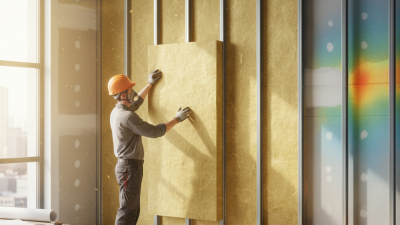
Choosing the right glass wool board depends on the building zone, not only on thermal rating. For interior partitions, ceilings, and acoustic enclosures, a medium-density board offers balanced sound absorption and easy cutting. It can reduce speech transfer in offices, classrooms, and meeting rooms. Soft edges help installers fill narrow gaps around services. Fit matters.
High-density glass wool boards suit external walls, roofs, and metal building systems where stronger support is needed. They provide thermal resistance while limiting heat flow through large surfaces. In humid areas, a suitable facing can help control vapor movement. However, facing selection must match the wall design and local climate. A thicker board is not automatically better.
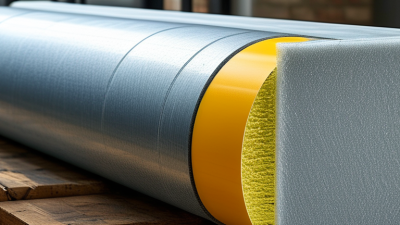
Industrial applications require closer inspection. Boards may insulate ductwork, process rooms, tanks, or equipment housings. Choose products with stable dimensions, suitable service temperatures, and tested fire performance. For noisy machinery, density and thickness should be assessed together, because either factor alone can mislead. Protective jacketing may be needed where impact, dust, or moisture is present. Check the assembly.
A common mistake is choosing from a catalog value without examining installation conditions. Compression, open joints, and thermal bridges can reduce real performance. Site measurements, manufacturer test data, and advice from a qualified building professional create a more reliable decision. My own preference would be cautious: verify the full system before ordering large quantities.
| Glass Wool Board Type | Best-Fit Applications | Typical Density (kg/m³) |
Typical Thermal Conductivity λ at 10°C (W/m·K) |
Common Thickness Range (mm) |
Typical Maximum Service Temperature | Key Performance Characteristics | Buyer Selection Guidance |
|---|---|---|---|---|---|---|---|
| Unfaced Thermal Insulation Board | Interior partition walls, suspended ceilings, roof spaces, non-load-bearing wall cavities and general building insulation. | 16–48 | 0.032–0.045 | 25–150 | Approximately 200–250°C depending on binder and product design |
Low thermal conductivity, lightweight construction and good cavity filling. The unfaced surface allows easier cutting and fitting. | Choose for dry, protected cavities where a separate vapor-control or air-sealing layer can be installed when required by the building design. |
| Kraft- or Foil-Faced Thermal Board | Roof insulation, exterior wall cavities, cold-room envelopes and applications requiring an integrated facing. | 24–64 | 0.032–0.044 | 40–150 | Usually limited by the facing, adhesive and installation system | Provides thermal insulation plus a facing that may support vapor control, air control or surface protection. | Confirm the facing’s vapor-permeance rating, fire classification, temperature limit and joint-sealing method. Foil facings are not automatically vapor barriers unless seams are properly sealed. |
| Acoustic Glass Wool Board | Room acoustics, recording spaces, cinemas, offices, schools, hotels, equipment enclosures and sound-absorbing wall panels. | 24–96 | 0.034–0.043 | 25–100 | Approximately 200–250°C for many standard products | Open fibrous structure absorbs airborne sound over a broad frequency range. Performance depends on thickness, airflow resistance, mounting and air gaps. | Select by acoustic test data such as sound absorption coefficient or noise-reduction rating rather than density alone. Add an acoustically transparent facing where appearance or fiber retention is needed. |
| High-Density Acoustic Panel | Acoustic wall and ceiling panels, exposed interior systems, impact-prone areas and applications requiring greater shape retention. | 60–120 | 0.035–0.045 | 25–100 | Typically around 200–250°C; verify the complete panel assembly | Improved rigidity and handling compared with low-density acoustic boards, while retaining sound absorption capability. | Use when the board must remain self-supporting or resist occasional handling. Check the fabric, coating and edge treatment because the complete panel controls fire and acoustic results. |
| HVAC Duct Insulation Board | Internal or external insulation of rectangular air ducts, air-handling systems and ventilation equipment. | 32–80 | 0.032–0.040 | 25–75 | Often approximately 120–200°C, depending on facing and duct system | Combines thermal insulation with improved duct-borne and breakout-noise control. Facings can help limit fiber release and protect the board surface. | Verify compatibility with the selected duct standard, air velocity, pressure class, cleaning method, facing, adhesive and fire/smoke requirements. |
| Exterior Wall or Façade Board | Ventilated façades, rainscreen walls, masonry cavity walls and external thermal insulation systems. | 80–150 | 0.034–0.042 | 50–200 | Typically around 200–250°C for the insulation core | Higher density and rigidity improve dimensional stability, wind-load resistance and installation performance. Water-repellent treatments may be available. | Confirm wind-load resistance, compressive or tensile performance, water repellency, fixing method, cavity width and compatibility with the façade system. |
| Roof and Floor Acoustic Board | Intermediate floors, floating floors, roof decks, partition bases and impact-sound control systems. | 60–120 | 0.035–0.045 | 20–100 | Usually around 200–250°C for the core | Designed to reduce impact transmission and airborne sound while also contributing to thermal insulation. | Prioritize dynamic stiffness, compressibility and tested impact-sound improvement. Do not substitute a general wall board without checking the floor-system design. |
| Industrial Equipment and Pipe Cladding Board | Boilers, tanks, large ducts, process equipment, pipe supports and low- to medium-temperature industrial insulation. | 48–96 | 0.034–0.045 | 25–100 | Commonly approximately 250–400°C; product-specific limits are essential | Lightweight, non-combustible mineral-fiber insulation with useful thermal and acoustic performance for flat or gently curved equipment surfaces. | Check the actual operating temperature, heat-up and cool-down cycles, cladding system, compression resistance, corrosion risk and binder limitations before purchase. |
| Fire-Resistant Board System | Fire-rated partitions, service shafts, compartment walls, ceiling systems and protection of building elements. | 40–120 | 0.034–0.045 | 50–200 | The tested assembly determines fire-resistance duration | Glass fibers are non-combustible, but binders, facings, fixings and surrounding components affect the fire behavior of the complete system. | Purchase only against a tested and classified assembly. Confirm the required fire-resistance period, fire classification, smoke performance, joints, penetrations and installation details. |
Technical note: The values shown are typical industry ranges for glass wool boards and are provided for preliminary comparison only. Actual thermal conductivity, density, fire classification, moisture resistance, acoustic rating and service temperature vary by product construction, test method, facing and installation. Buyers should request current third-party test reports and verify compliance with the applicable local standards before final specification.
For global buyers, glass wool board quality starts with measured performance, not attractive product photos. The 2024 Global Status Report for Buildings and Construction states that buildings consume about 32% of global energy and produce 34% of global carbon emissions. Insulation selection therefore deserves technical scrutiny. Check declared thermal conductivity, density, thickness tolerance, and water-repellent performance. Typical glass wool boards show thermal conductivity near 0.032–0.040 W/m·K, but values vary with testing conditions. Request reports based on ISO 8301, ASTM C518, or equivalent methods.
Safety requires more than a fire rating printed on a carton. Verify classification under EN 13501-1 or the relevant national standard, especially when facings, adhesives, or coatings are included. Ask for current safety data sheets, fiber-composition information, formaldehyde emissions data, and installation guidance. Gloves, eye protection, ventilation, and careful cutting matter on site. Small mistakes become expensive. A damaged edge can create a hidden thermal bridge.
Total purchasing cost includes more than the factory quotation. Compare usable square meters, packaging volume, container loading, freight, duties, storage, installation time, and disposal. Moisture exposure during sea transport deserves attention; wrapped boards may still suffer if condensation enters damaged packaging. I would also test a small shipment before signing a large contract. A perfect spreadsheet is not the same as a reliable building. Sometimes, the cheapest board creates the highest labor cost.