 Environmental Building Board
 Fire-proof Board
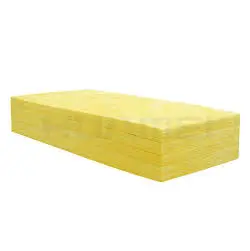 Sound Resistance
 Termite Resistance
Leave Your Message
Choosing the China Top 10 Sound Absorbing Glass Wool Suppliers requires more than comparing prices and product photographs. This market includes manufacturers, export specialists, and regional factories with different strengths. Some focus on acoustic panels for offices, theaters, and recording rooms. Others produce glass wool rolls, boards, or building insulation for large construction projects. Product density, thickness, facing materials, fire performance, moisture resistance, and installation support all deserve careful review. A low quotation may not represent the lowest project cost.
Dr. Lily M. Wang, an acoustics researcher and educator, explains, “Sound absorption is the process by which sound energy is converted into heat.” This principle helps buyers understand why fiber structure, airflow resistance, and panel placement matter. In a quiet meeting room, the right Sound-Absorbing Glass Wool can reduce flutter echoes and improve speech clarity. In a factory, it may help control reflected noise around metal surfaces. Small details matter.
This guide examines ten Chinese suppliers through practical criteria, including manufacturing experience, testing documentation, customization ability, export reliability, and after-sales communication. Certifications can support trust, but they should be checked against the exact product model. Supplier rankings may also change. Honestly, no single company suits every project. One factory may offer excellent acoustic performance, while another provides better lead times or installation guidance. Buyers should request current samples, technical data sheets, and project references before making a final decision. A careful comparison is slower, but usually more reliable.
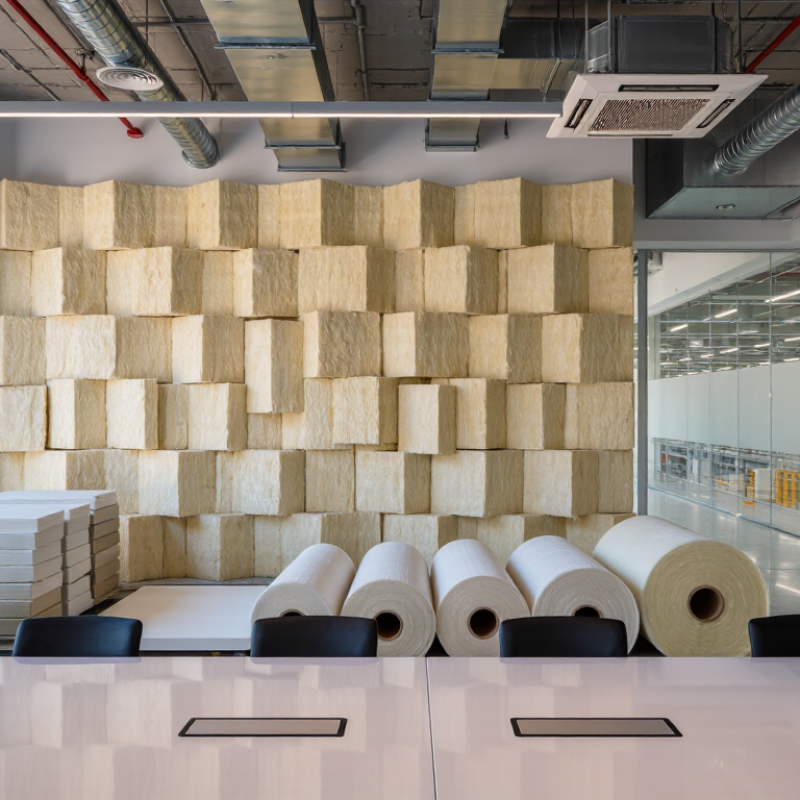
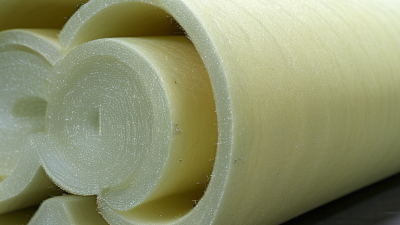
Sound-absorbing glass wool is a porous insulation material made from fine, spun glass fibers. Its open structure traps air and reduces sound energy through friction. It does not block every sound. Instead, it absorbs reflected noise inside walls, ceilings, studios, offices, and equipment rooms.
Acoustic performance depends on thickness, density, facing, and installation depth. ASTM C423 measures sound absorption across different frequencies, while ISO 354 evaluates absorption in reverberation rooms. Exposed glass wool panels often achieve an NRC of about 0.80 to 1.05, depending on the assembly. Thicker layers usually improve low-frequency absorption. An air gap behind the panel can help further. However, NRC is not a guarantee for real buildings. I have seen poor installation weaken otherwise strong laboratory results.
The World Health Organization’s 2018 Environmental Noise Guidelines recommend keeping road-traffic noise below 45 dB Lnight to protect sleep. Glass wool can support this goal, but it must work with airtight barriers, sealed joints, and careful room design. It absorbs sound; it does not replace sound isolation.
Tips: Check test data at 125, 250, 500, 1,000, and 2,000 Hz. Choose thickness according to the noise problem. Protect exposed fibers with suitable acoustic fabric. Avoid judging products by density alone. Some specifications look impressive, yet the installed result may disappoint.
| No. | Supplier Profile | Main Manufacturing Region | Typical Product Form | Common Density Range | Typical Thickness | Sound Absorption Performance | Thermal Conductivity | Fire Performance | Typical Applications | Key Evaluation Point |
|---|---|---|---|---|---|---|---|---|---|---|
| 1 | Profile 01 | East China | Acoustic glass wool board with black or tissue facing | 48–96 kg/m³ | 25–100 mm | NRC commonly 0.75–1.00, depending on thickness and installation | Approximately 0.032–0.044 W/m·K | Non-combustible options available | Studios, offices, cinemas, conference rooms | Check edge treatment, facing durability, and tested NRC values |
| 2 | Profile 02 | North China | Glass wool roll and blanket for building interiors | 12–48 kg/m³ | 25–100 mm | NRC commonly 0.60–0.95 in cavity or ceiling systems | Approximately 0.034–0.045 W/m·K | Non-combustible glass fiber | Partition walls, suspended ceilings, HVAC ducts | Verify roll compression recovery and dimensional stability |
| 3 | Profile 03 | Central China | Rigid acoustic glass wool panel | 64–120 kg/m³ | 25–50 mm | NRC commonly 0.80–1.05, subject to test method and mounting | Approximately 0.033–0.043 W/m·K | Fire-rated configurations available | Auditoriums, lecture halls, music rooms | Request laboratory reports for the exact panel construction |
| 4 | Profile 04 | South China | Decorative acoustic glass wool panel with fabric finish | 48–96 kg/m³ | 25–50 mm | NRC commonly 0.80–1.00 when directly mounted or suspended | Approximately 0.032–0.044 W/m·K | Low-flame-spread facings available | Hotels, restaurants, retail interiors | Confirm fabric colorfastness, cleanability, and formaldehyde data |
| 5 | Profile 05 | East China | High-density glass wool board for acoustic wall systems | 80–140 kg/m³ | 25–75 mm | NRC commonly 0.85–1.05 with an air gap | Approximately 0.034–0.046 W/m·K | Non-combustible core options | Industrial noise control, plant rooms, equipment enclosures | Density alone does not determine absorption; verify frequency data |
| 6 | Profile 06 | Northwest China | Faced glass wool insulation blanket | 16–64 kg/m³ | 50–150 mm | NRC commonly 0.65–0.95 in wall and ceiling cavities | Approximately 0.035–0.046 W/m·K | Fire-resistant facings available | Factories, warehouses, metal buildings, roof systems | Evaluate vapor permeability and facing tear resistance |
| 7 | Profile 07 | Southwest China | Acoustic ceiling panel made from glass wool | 64–100 kg/m³ | 15–40 mm | NRC commonly 0.70–1.00 depending on ceiling plenum and mounting | Approximately 0.033–0.044 W/m·K | Classified options available | Open-plan offices, schools, hospitals | Review humidity resistance, sag resistance, and light reflectance |
| 8 | Profile 08 | East China | Glass wool duct liner and acoustic HVAC board | 32–80 kg/m³ | 25–50 mm | Effective for duct breakout and airflow noise reduction | Approximately 0.034–0.045 W/m·K | Interior HVAC fire options available | Air-conditioning ducts, ventilation systems, plant rooms | Check erosion resistance, cleanability, and air-stream suitability |
| 9 | Profile 09 | North China | Acoustic glass wool board with reinforced facing | 48–120 kg/m³ | 25–100 mm | NRC commonly 0.75–1.00 in wall panels and acoustic clouds | Approximately 0.032–0.044 W/m·K | Low-smoke and fire-tested options | Transportation buildings, public halls, commercial interiors | Confirm surface impact resistance and installation accessories |
| 10 | Profile 10 | Central and South China | Customized glass wool acoustic modules | 48–120 kg/m³ | 25–100 mm | NRC commonly 0.80–1.05 when designed with an air cavity | Approximately 0.033–0.045 W/m·K | Project-specific fire documentation | Recording rooms, broadcast facilities, premium interiors | Require production drawings, samples, and project-specific test data |
Technical note: Sound-absorbing glass wool is a porous fibrous material made from spun glass fibers. It reduces reflected sound by converting part of the sound-wave energy into heat as air moves through the fiber structure. Actual acoustic performance depends on fiber structure, density, thickness, facing, mounting method, air gap, and test frequency. NRC and thermal-conductivity values should always be confirmed against the exact product and applicable laboratory standard.