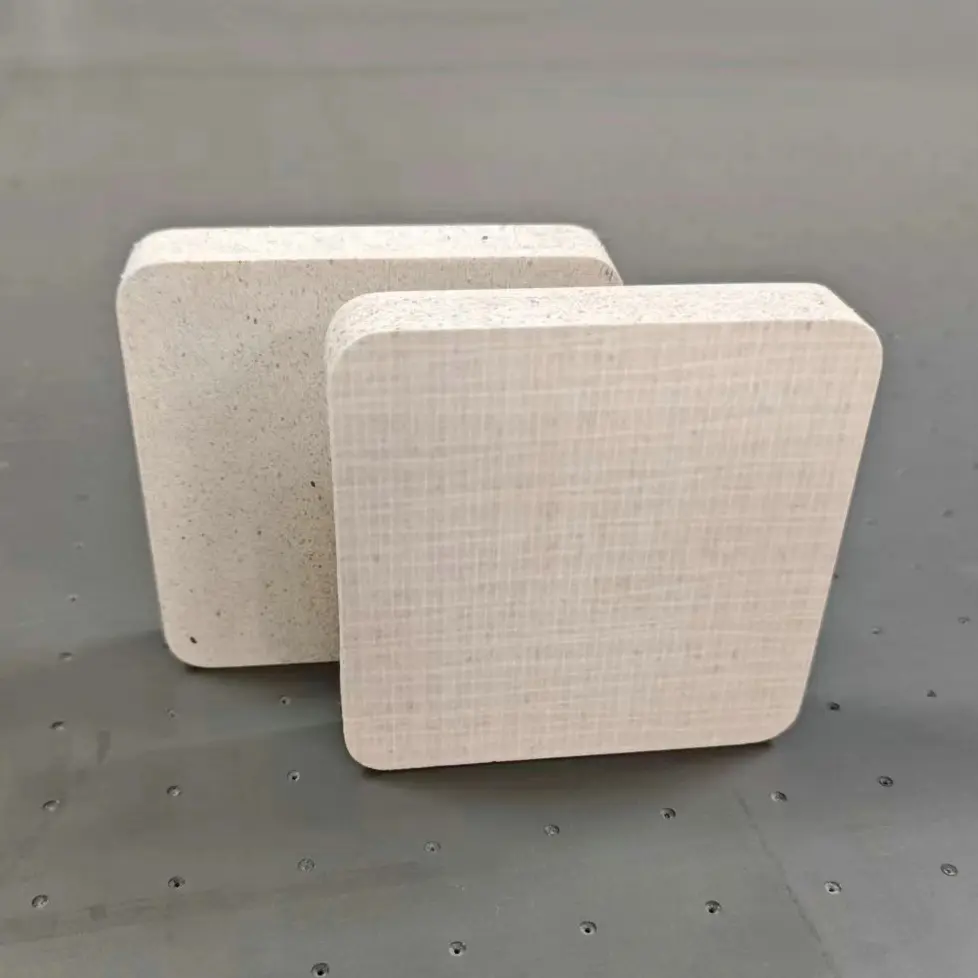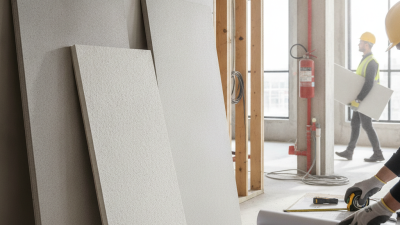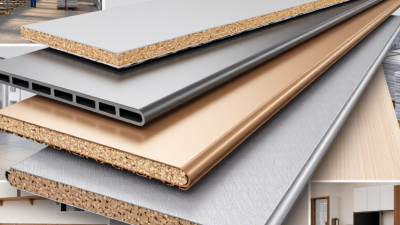
For global buyers, choosing a sound-insulation supplier is not simply a matter of comparing prices. Sound-Insulating Rock Wool must suit the wall, ceiling, or equipment enclosure where it will be installed. A thick slab beside a noisy plant room feels substantial, but thickness alone does not guarantee better acoustic performance. Product density, facing, installation gaps, and the sound path all matter.
Professor Trevor Cox, an acoustics researcher at the University of Salford, has helped make room acoustics more accessible. A buyer-focused paraphrase of a principle reflected in acoustics research is: “Choose materials for the sound path and test conditions, not by product name alone.” That distinction is useful. Supplier claims should be checked against test reports, declared product specifications, and the conditions behind each result. Details count.
This guide introduces leading suppliers for international buyers and the questions worth asking before requesting a quotation. Look for consistent product data, suitable acoustic test evidence, clear packaging details, and realistic lead times. Ask whether samples match the stated specification. Then confirm how products will be protected during shipment. Even strong material can disappoint when joints are left open or installation is uneven. That is easy to overlook. Supplier rankings also have limits: availability and performance vary by market, product range, and project design. Treat this overview as a starting point, not a substitute for project-specific review.

Sound-insulating rock wool is made by spinning molten mineral material into a mat of fine, interwoven fibers. The spaces between those fibers hold air. When sound waves enter the porous structure, the air and fibers vibrate, and some acoustic energy becomes a small amount of heat. It is absorption, not magic.
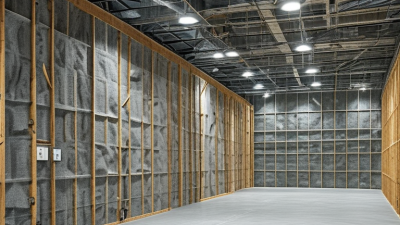
In a wall or ceiling, the material is usually fitted inside a cavity between framing members. Thickness and cavity depth affect performance, while density alone does not tell the whole story. A practical detail matters: cut the batts to fit snugly, but do not compress them tightly. Gaps around pipes, electrical boxes, or edges can let sound travel around the insulation.
Rock wool can reduce reverberation inside a room and help limit sound moving through a building assembly. It cannot, by itself, make a thin partition soundproof. Results also depend on the wall layers, airtightness, and how well the structure is separated from adjoining surfaces. On site, cuts are rarely perfect. That is worth checking, because a small unfilled opening may undermine an otherwise careful installation.
For global buyers, compare tested performance rather than relying on “high density” claims. Mineral Wool Insulation Manufacturers Association technical guidance commonly reports rock-wool thermal conductivity around 0.034–0.040 W/m·K; check the test method and mean temperature behind each figure. For acoustics, request sound-absorption results under ASTM C423, including frequency-band data. A single NRC value can hide weak performance at low frequencies, where machinery rumble may remain audible.
Safety needs equal scrutiny. European mineral-wool industry guidance describes fibers withstanding temperatures above 1,000°C, but that figure does not certify a complete wall or ceiling assembly. Ask for the exact product’s fire-test documentation, facing details, and service-temperature limits. Also compare water-repellency data, thickness tolerance, and installation guidance. Small gaps around pipes can undermine an otherwise strong acoustic design.
Tips: Compare like with like: same thickness, test method, and installation condition. Request ASTM C518 conductivity data and ASTM C423 acoustic reports. One detail buyers sometimes overlook is workmanship; laboratory performance may not match a rushed site installation. Recheck the report’s product code before ordering.
For global projects, evaluate suppliers against documented performance, not headline density alone. Rock wool’s acoustic behavior depends on thickness, airflow resistivity, facing, cavity depth, and installation. Ask for test reports that identify the tested product and method, plus sound absorption data across relevant frequencies. A single “high absorption” claim is not enough. One detail is easy to miss.
Tips: Request a current sample, batch-level quality records, and clear product dimensions. Check that the sample matches the specification and the goods expected for shipment. Ask how the supplier controls variation between production runs. Ask for evidence.
Review fire-performance documents and confirm applicable building requirements with your project team. For international delivery, check packaging, moisture protection, lead times, and the supplier’s process for handling delays or specification changes. A polished brochure can still leave awkward gaps, especially around test conditions and installation guidance. Plans change. Ask who will answer technical questions during procurement and site installation, and whether responses can be provided in writing. Compare suppliers using the same checklist; otherwise, different assumptions can make prices and performance difficult to judge fairly.
Supplier regions differ in production scale, technical support, and delivery options. European suppliers often serve buyers seeking detailed product data and established acoustic testing practices. Confirm that test reports match the exact product thickness and density you plan to order. A report for one specification may not apply to another.
East Asian markets can offer broad manufacturing capacity and varied product formats. Large production runs may be efficient, but lead times and export packaging deserve close review. North American suppliers may be practical for regional projects, especially when local stock or shorter transit routes matter. Availability still varies by location. Details matter. Compare delivered cost, not just the quoted price.
Tips: Request samples and current technical sheets before approving a supplier. Check declared density, thickness tolerance, facing options, and the test method used for sound absorption. Ask how products are protected from moisture during transport. Compare equivalent specifications across regions; otherwise, a lower price can be misleading. Some supplier information may be incomplete, so verify key claims directly rather than assuming every market uses identical measures.
| Supplier Region | Market Characteristics | Common Product Formats | Sound-Insulation Applications | Buyer Checks |
|---|---|---|---|---|
| Europe | A mature insulation market with established building and industrial specifications. Products for construction are commonly assessed against European product standards, including EN 13162 for factory-made mineral-wool products. | Slabs and boards, rolls or mats, pipe sections, and faced products. | Internal partitions, ceilings, floors, façades, HVAC systems, and industrial equipment enclosures. | Confirm the applicable product standard, declared acoustic and thermal performance, fire classification, dimensions, facing, and documentation for the destination market. |
| China and East Asia | A broad manufacturing and export base offers a wide range of mineral-wool product types. Export specifications, certification coverage, and lead times can vary by producer and destination. | Boards, batts, rolls, pipe insulation, and industrial-grade products. | Building partitions and ceilings, equipment rooms, ductwork, and industrial sound-control projects. | Request test reports for the exact product and thickness being quoted; verify density, thickness tolerance, facing, packaging, and shipment terms. |
| India and South Asia | Supply serves both building and industrial insulation demand. Product availability and export readiness may differ across manufacturers and product categories. | Slabs, rolls, pipe sections, and insulation for industrial applications. | Commercial buildings, factories, power and process facilities, HVAC systems, and acoustic partitions. | Check production capacity, availability of the required density and thickness, quality-control records, and compliance with the project’s local specifications. |
| North America | A specification-led market where buyers often request product data and test methods aligned with project requirements. ASTM C612 covers mineral-fiber block and board thermal insulation; ASTM C553 covers mineral-fiber blanket thermal insulation. | Boards, batts, blankets, pipe insulation, and acoustic ceiling or wall products. | Stud walls, ceilings, mechanical rooms, ducts, pipes, and industrial noise-control assemblies. | Check that the cited test applies to the intended product and assembly. For sound absorption, request relevant test data, such as results obtained using ASTM C423 where applicable. |
| Turkey and the Eastern Mediterranean | A geographically positioned source region for buyers serving nearby European, Middle Eastern, and North African markets. Freight routes and documentation requirements depend on the destination and order size. | Boards, rolls, pipe sections, and general-purpose building or industrial insulation. | Building envelopes, partitions, HVAC installations, and industrial facilities. | Confirm product certifications for the destination country, export documentation, minimum order quantities, and the full delivered cost. |
| Middle East and North Africa | Supply may include regional production as well as imports; product range, availability, and lead times vary considerably by country and project. | Building boards and rolls, pipe insulation, and industrial insulation products. | Commercial construction, plant rooms, ducts, pipelines, and process-industry installations. | Verify local acceptance requirements, temperature and fire performance where relevant, stock availability, and delivery arrangements to the project site. |
For global buyers, compliance starts with the destination market, not a supplier’s general certificate. Request current, batch-linked test reports for thermal conductivity, fire classification, water absorption, and dimensional stability. Check that reports cite standards accepted locally, such as EN 13162 or ASTM C612 where applicable. A certificate alone is not proof that every shipment matches the tested product. Ask for traceable batch numbers and product data sheets before ordering.
Logistics can quietly erode value. Confirm pallet dimensions, moisture-resistant wrapping, container loading plans, and replacement terms for transit damage. These details matter when dense boards arrive with crushed corners or wet packaging. The UNEP Global Status Report for Buildings and Construction 2024 reports that buildings use 32% of global energy and contribute 34% of energy-related CO2 emissions. That scale makes dependable insulation a practical performance decision, not just a purchase-price comparison. Still, a lower quoted price can look attractive; compare delivered cost, installation waste, and documented service life.
Tips: Request a sample from the production line, not only a showroom piece. Compare its density and edge finish with the specification. Keep a modest allowance for cutting waste, and verify lead times against your project schedule. Small checks help. They are easy to skip.